Article · 3 min read
THC Transparency in CBD: How to Read the COA
Wondering how much THC is in your CBD? Learn what less than 0.3% THC means, who should pay attention, and how to read the COA to check the result yourself.
THC is the number-one question people ask before trying CBD. It is a reasonable question. You have every right to know exactly what is in a product before you put it in your body.
This article explains what "less than 0.3% THC" means, who should pay the closest attention to it, and how to confirm the number yourself -- not just on the label, but in the lab report.
What Less Than 0.3% THC Means
THC is the compound in the cannabis plant responsible for psychoactive effects -- the "high" associated with marijuana.
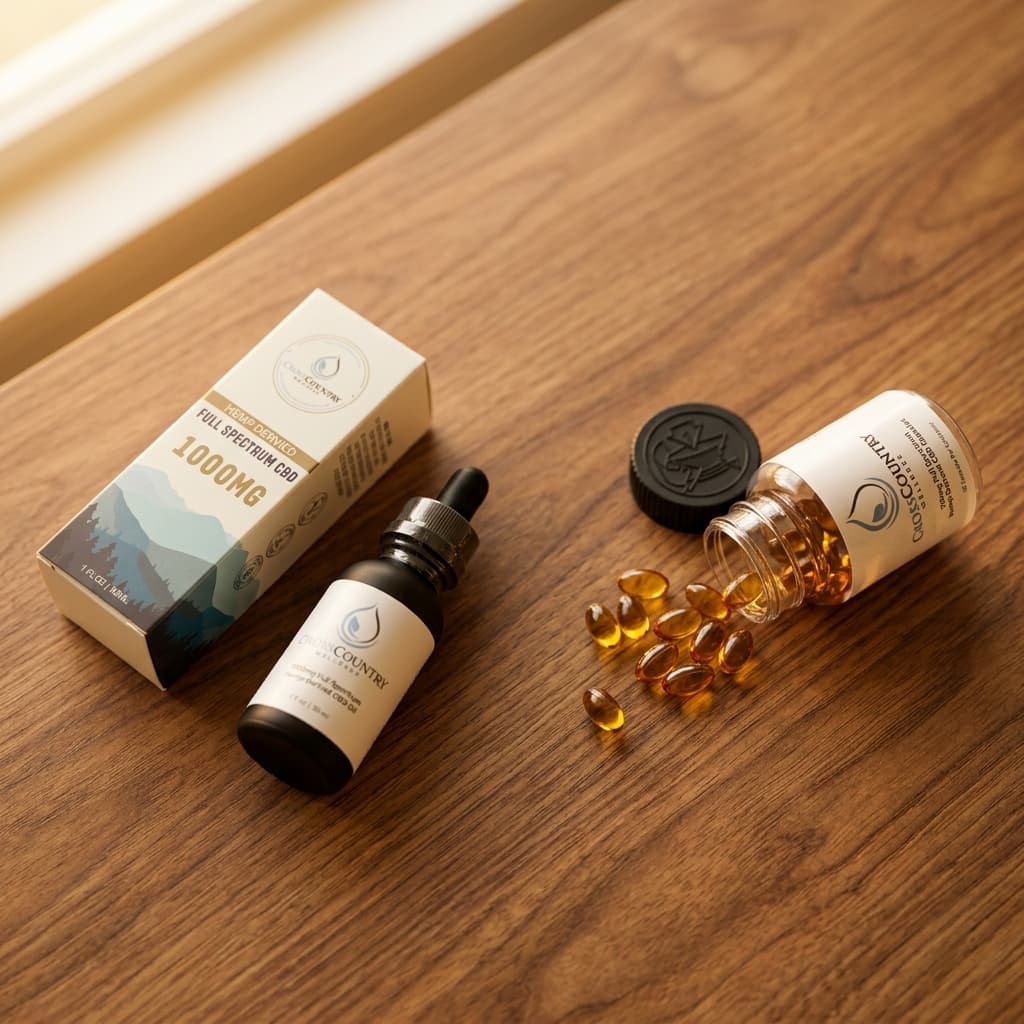
Under the 2018 Farm Bill, hemp is legally defined as cannabis with 0.3% THC or less by dry weight. Full spectrum hemp products, including Cross Country Wellness oils, capsules, and topical cream, fall into this category. They are legal, and they do contain a small amount of THC.
"Less than 0.3%" is a legal limit, not a promise of zero. That is why the number on the Certificate of Analysis matters more than any claim on a label.
Who Should Pay Closest Attention?
People who are drug tested. If your employer conducts drug screenings, trace THC from a full spectrum product can potentially contribute to a positive result. Read our guide to CBD and drug testing, and talk to your employer before you start.
First-time CBD buyers. If you have never tried CBD before, knowing exactly what is in the product gives you a clear starting point. Read the COA before you buy.
People who are sensitive to THC. Some individuals are more sensitive to THC than others. If that is you, check the THC result on the COA and talk to your healthcare provider first.
Anyone who simply wants to know. You do not need a specific reason. Wanting to know what is in your wellness routine is a perfectly valid starting point.
How to Verify the THC Result
A label is printed by the company selling the product. Verification requires looking at the lab results.
Here is how to confirm the THC number:
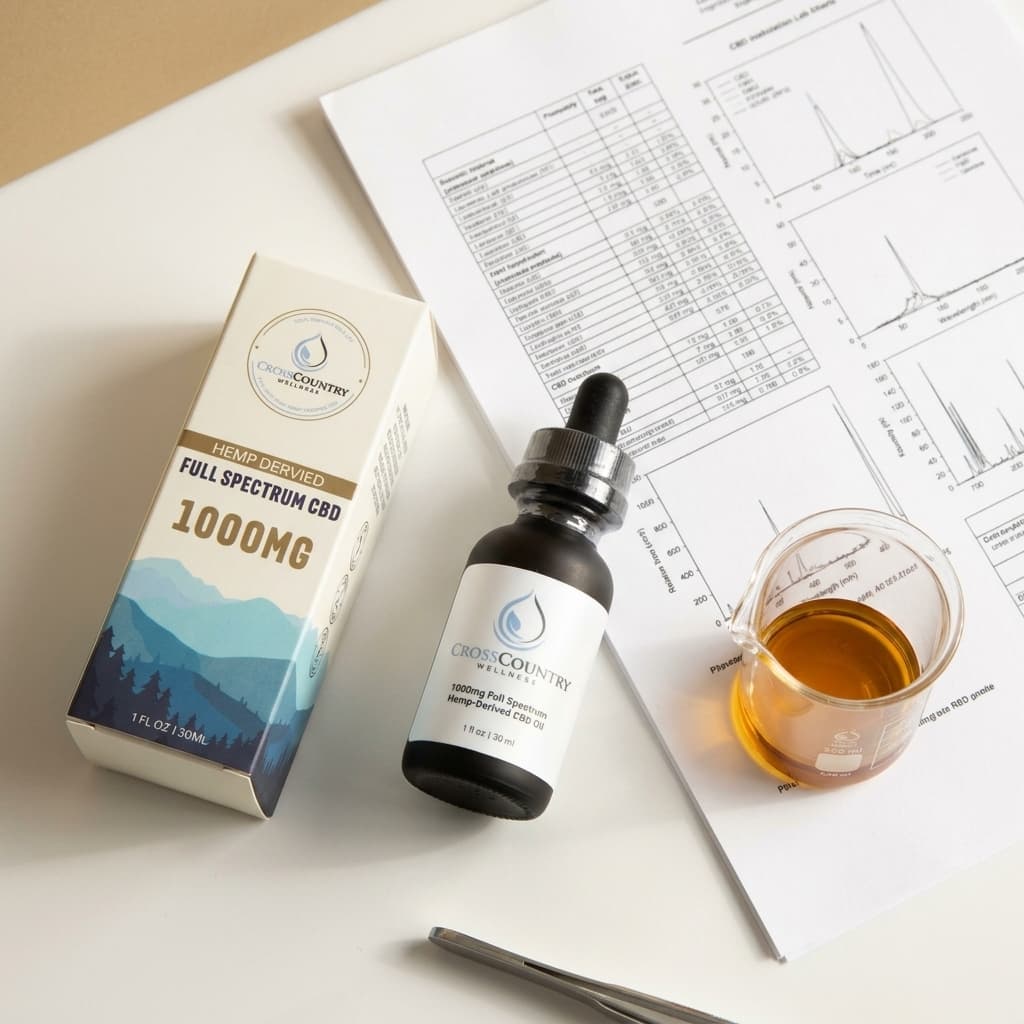
Step 1: Find the Certificate of Analysis (COA). A trustworthy brand will publish a COA from an independent laboratory. If you cannot find the COA, that is a problem.
Step 2: Look at the cannabinoid profile. Find the line for Delta-9 THC, and check whether the report also lists total THC. For a full spectrum product, expect a small number. The result should be under the 0.3% limit.
Step 3: Know what the symbols mean. "ND" means not detected. A percentage or a milligram value means THC was found at that level.
Step 4: Check the lab name. The COA should identify the independent lab that performed the test. Reputable labs are accredited and can be verified.
Step 5: Match the batch number. The batch number on the COA should match the batch number on your product. This confirms that the test applies to the specific product in your hands.
How Cross Country Wellness Does It
Our oils, capsules, and topical cream are full spectrum: Farm Bill compliant, less than 0.3% THC by dry weight, and every batch is third-party lab tested.
We send every batch to an independent lab. The lab tests for cannabinoid content, including THC. The results are published in a Certificate of Analysis that you can read on our website.
When you read the COA, you can see the THC result yourself. We publish our results because we have nothing to hide.
Our 1000mg CBD Oil, CBD Capsules, and Topical Cream are all full spectrum.
The Bottom Line
You should never have to guess how much THC is in a CBD product. The only way to know for certain is to read the lab results -- not the label.
If a brand will not show you the COA, find one that will.
Written by the Cross Country Wellness team.
Reviewed by J Bird before publication.
*Not evaluated by the FDA. Not intended to diagnose, treat, cure, or prevent any disease.